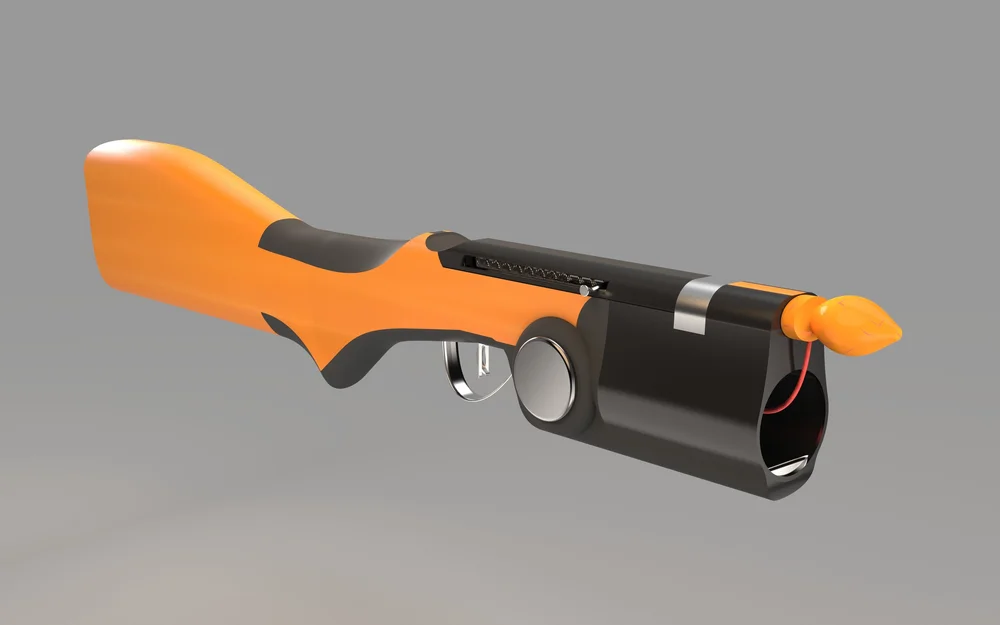
RescueLauncher
An ergonomic line launcher designed for water rescue personnel that incorporates a motorized line retrieval system. The design addresses key limitations of existing systems including limited range, cumbersome repacking requirements, and non-ergonomic stock configurations.
Water rescue personnel respond to emergencies like drownings and boating accidents, using lifesaving techniques, CPR, and specialized equipment to ensure safety. They patrol aquatic areas and coordinate with emergency services to execute swift and effective rescues. Understanding their workflow and pain points was critical to developing a solution that could perform under pressure.

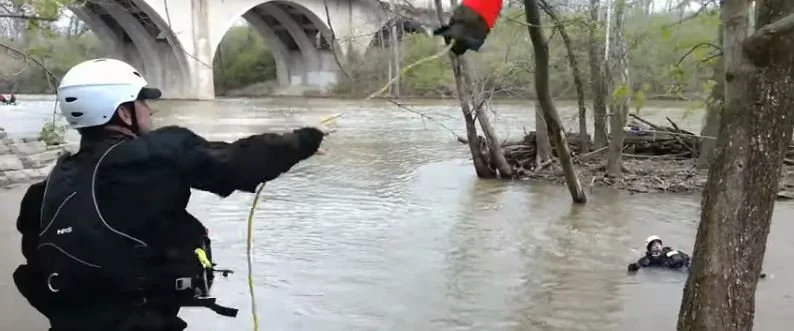
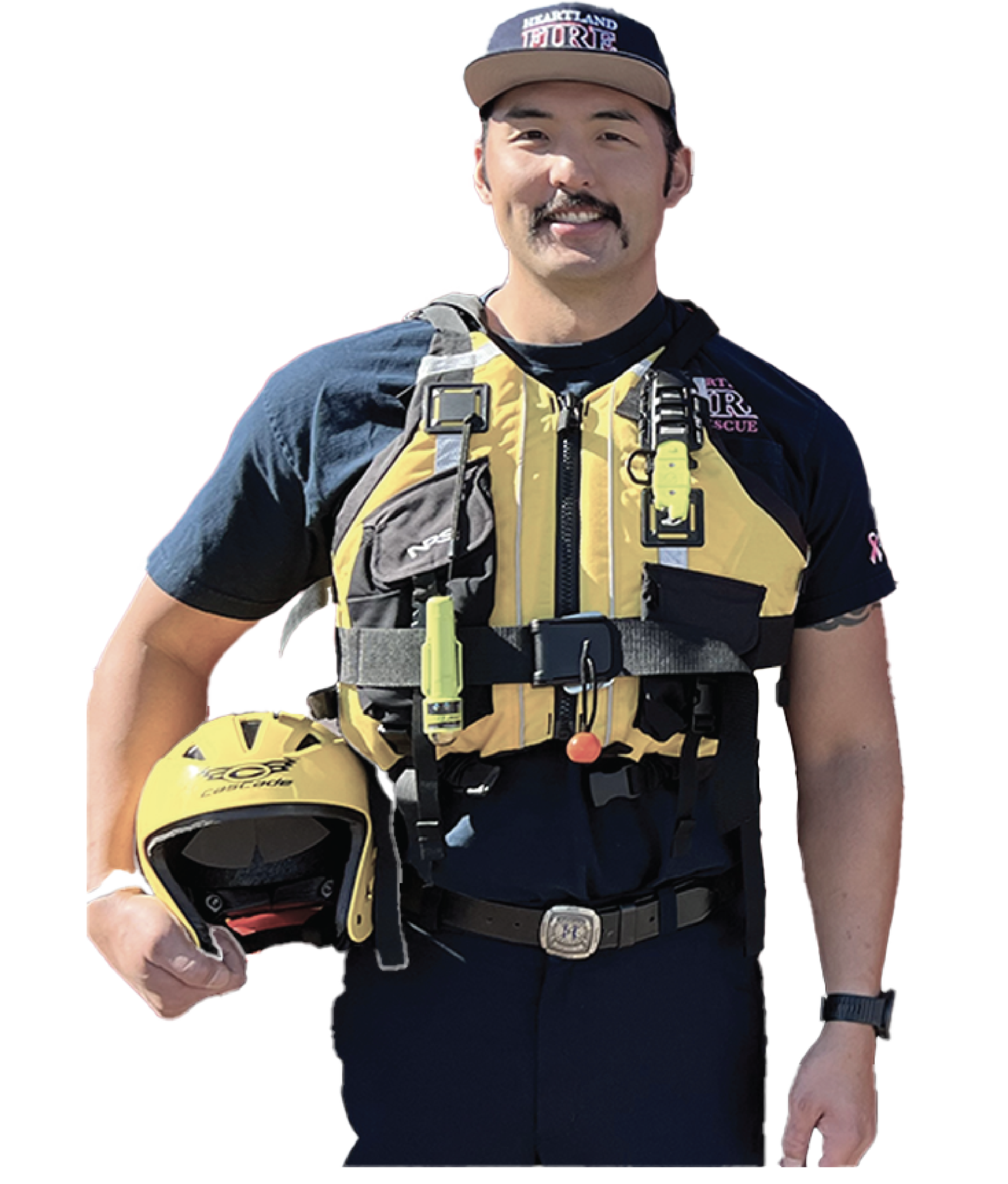
Water rescue contexts - patrol operations, emergency response scenarios, and line deployment use cases

Task analysis of traditional rope bag deployment - identifying complexity, slow deployment, and repacking challenges
Current Line Launcher Systems
Standard line launchers use a pistol-grip format with .22 blank propulsion but lack any motorized retrieval capability. After each deployment, operators must manually re-spool the line—a time-consuming process during time-critical rescue scenarios. Pain points include non-ergonomic stock design, excessive weight, high cost, and durability issues.
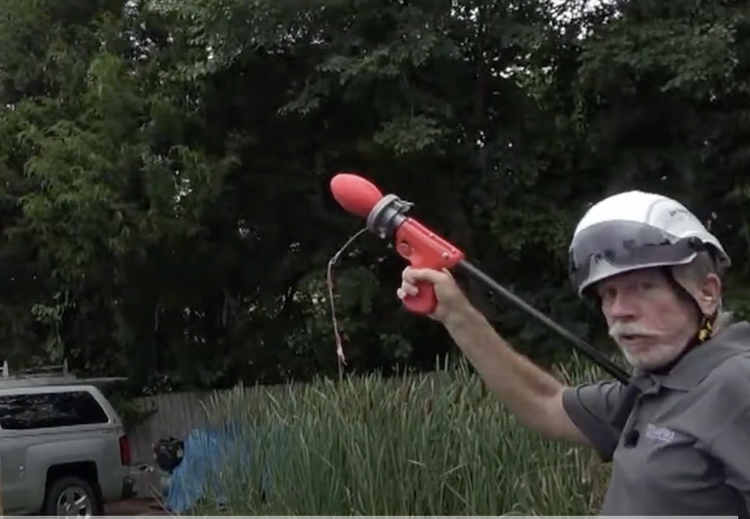
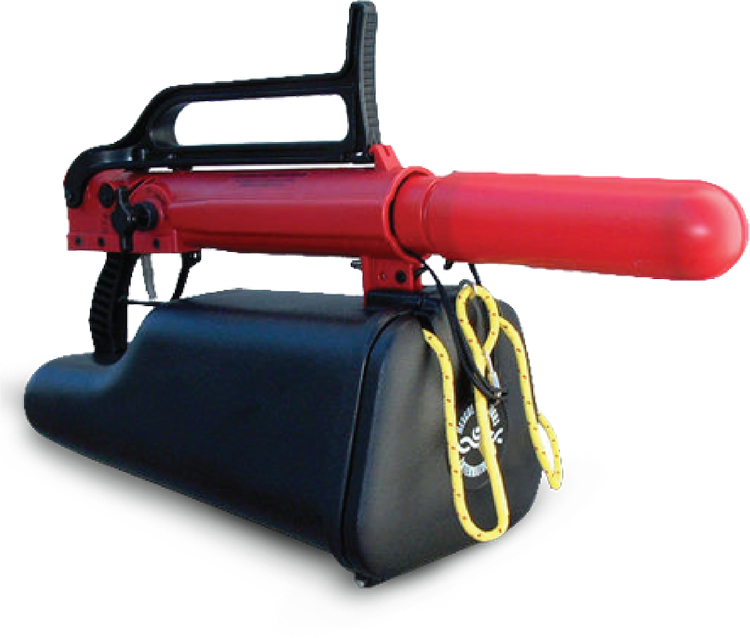
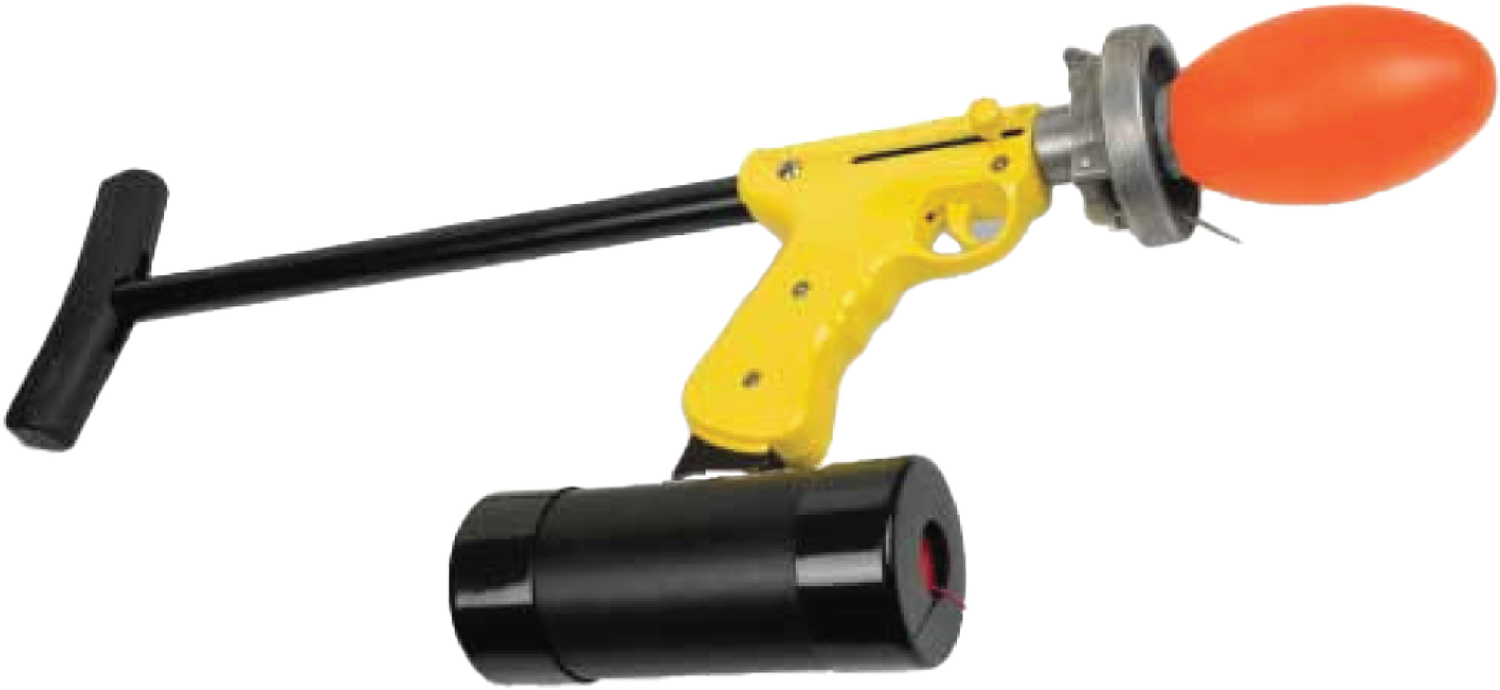
Examples of existing line launcher products and field usage
Electronic fishing reels provided critical insights into compact motor integration and reliable line spooling under tension. Their proven mechanisms for automated retrieval informed the core functionality of the rescue launcher design.
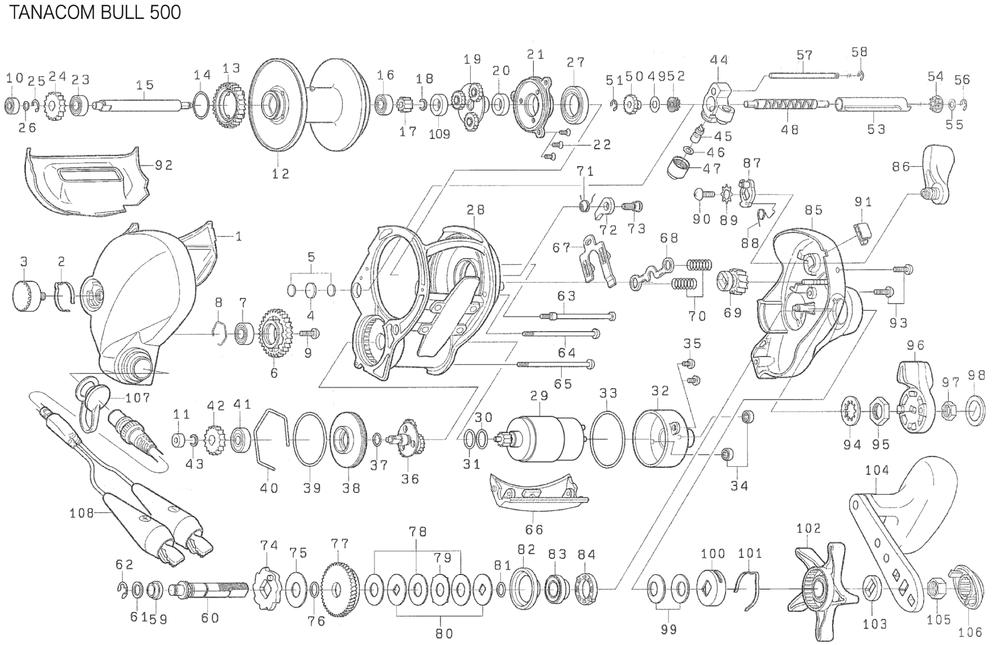
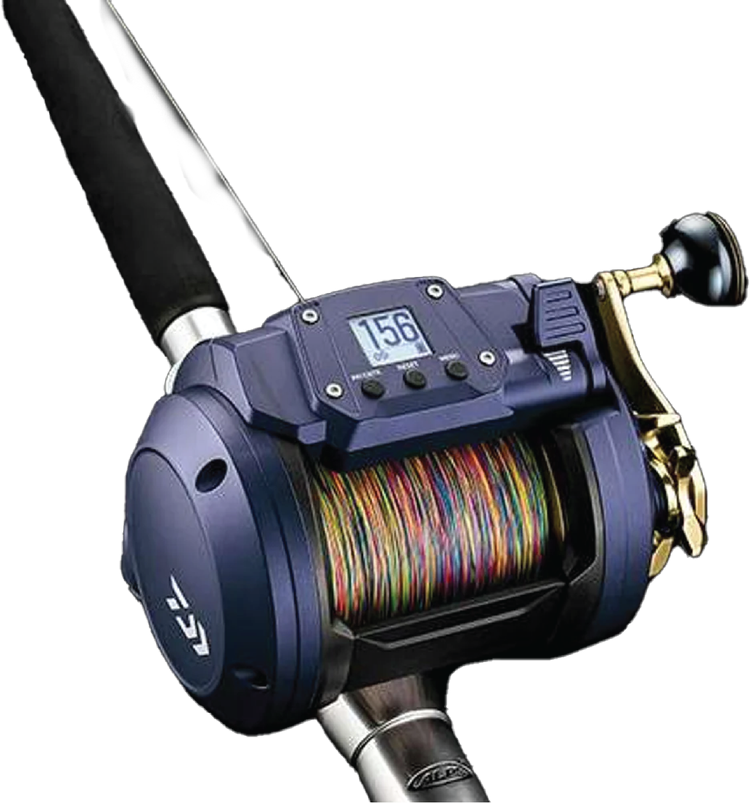
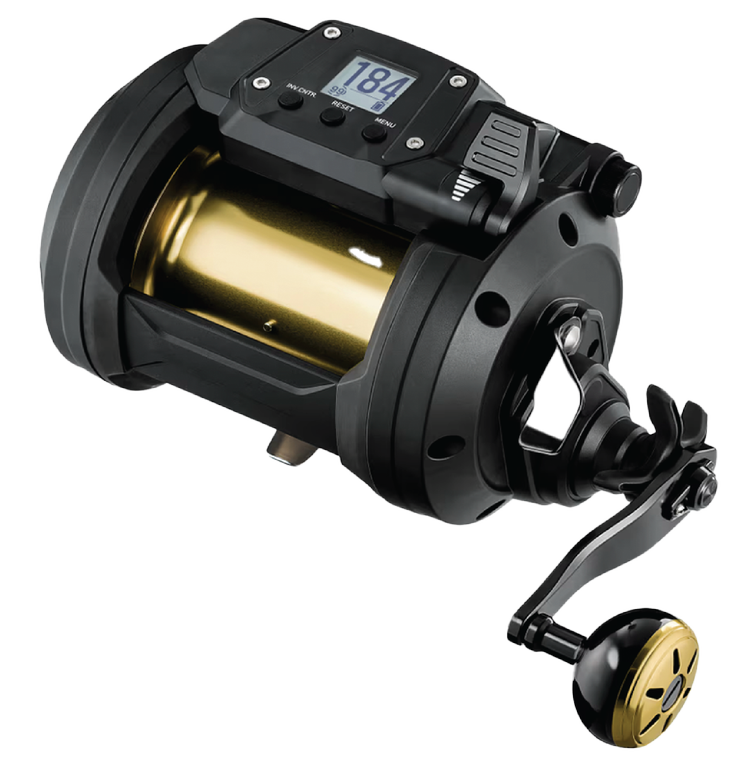
Mechanism analysis and precedent products - studying motor placement, spool mechanisms, and line management systems
The ideation phase explored different forms through thumbnail sketches to address ergonomic issues with current launchers. Multiple form factors were evaluated for grip comfort, operational efficiency, and the integration of a motorized retrieval system.
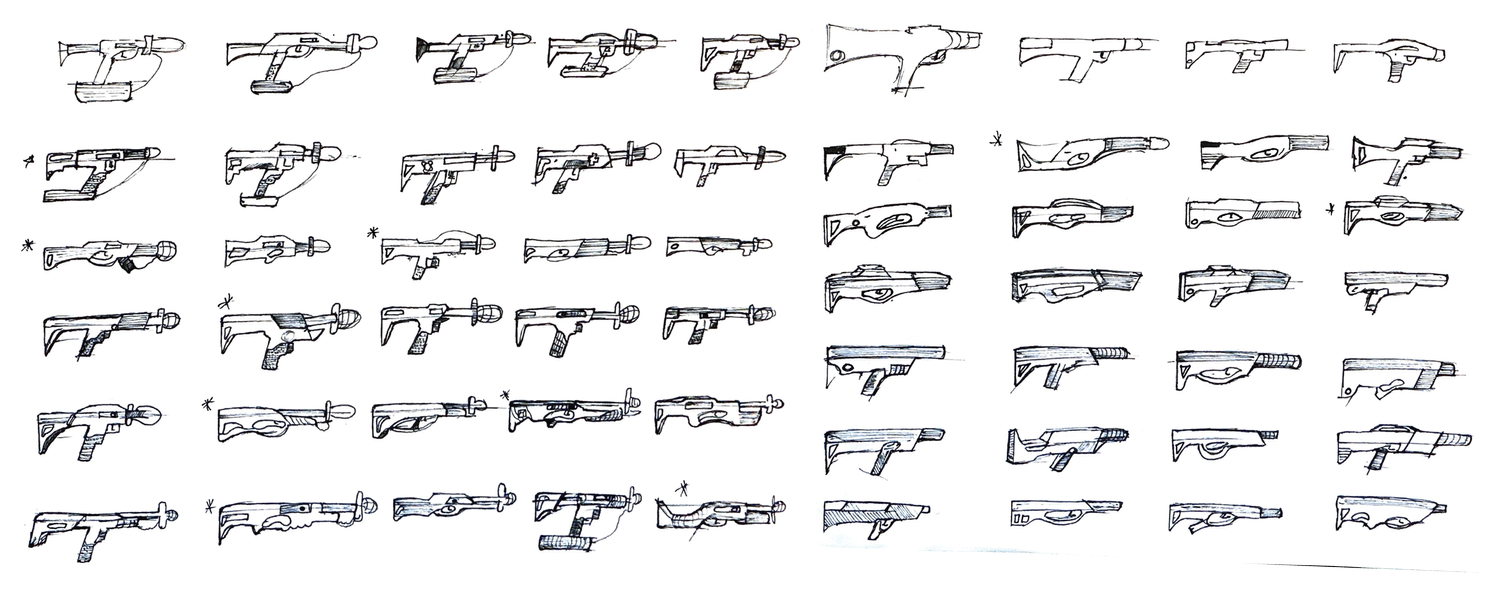
Thumbnail sketch exploration - form factor ideation
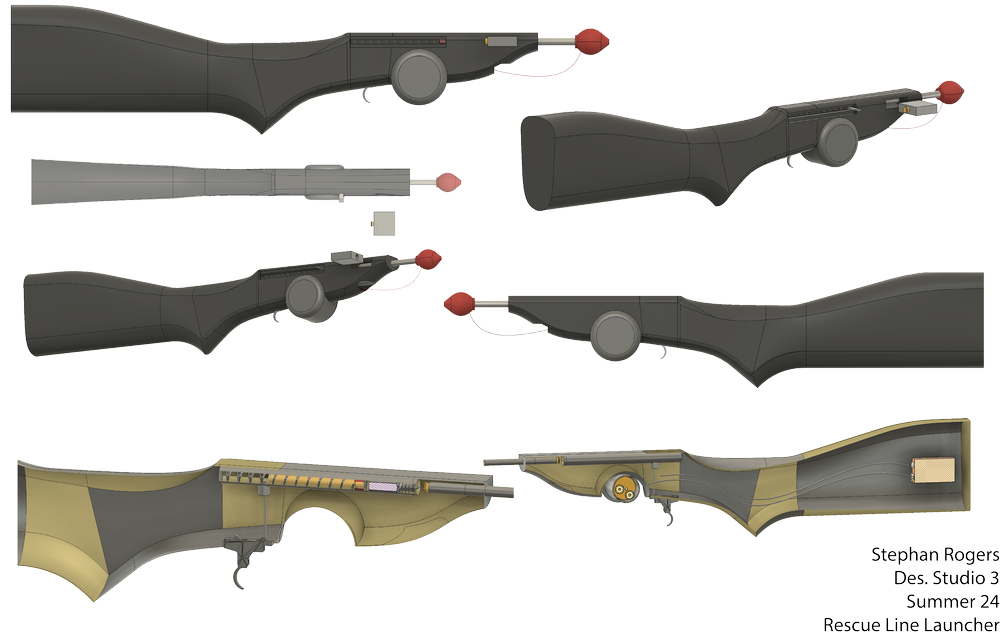
Early form studies - exploring stock configurations and material directions
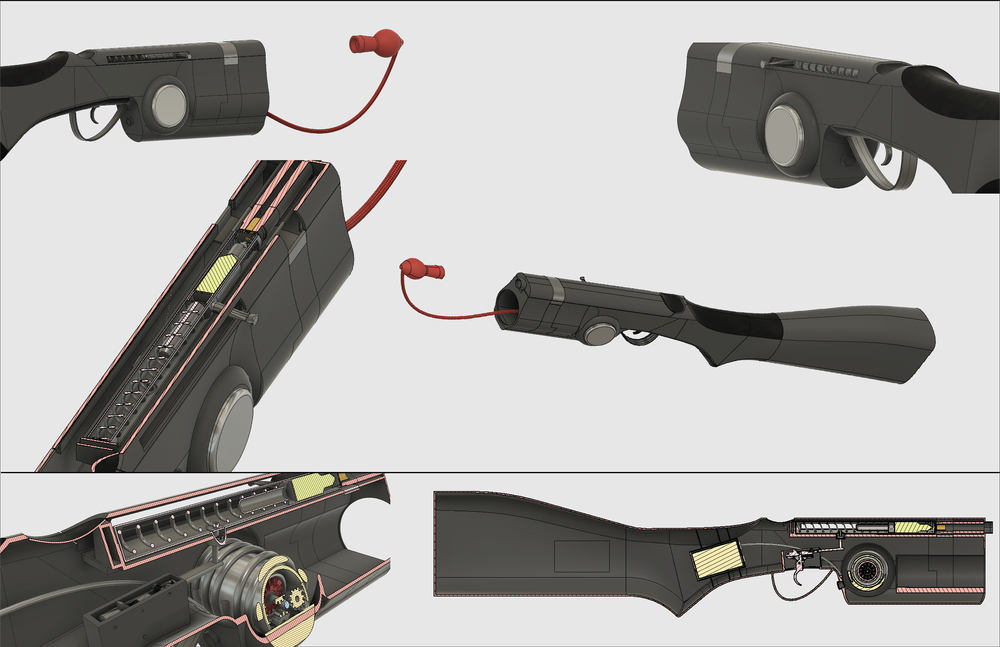
Refined direction - detail views and internal mechanism visualization
The chosen direction prioritized ergonomic handling during high-stress rescue scenarios while integrating the motorized retrieval mechanism seamlessly into the form. Key criteria included one-handed operation capability, intuitive controls, and balanced weight distribution when loaded.
Prototyping included multiple iterations cut from 15lb pink foam for form and ergonomic evaluation. User feedback was incorporated into refinements, focusing on grip comfort, trigger reach, and motor button placement. Testing revealed the importance of weight balance and the need for ambidextrous operation.
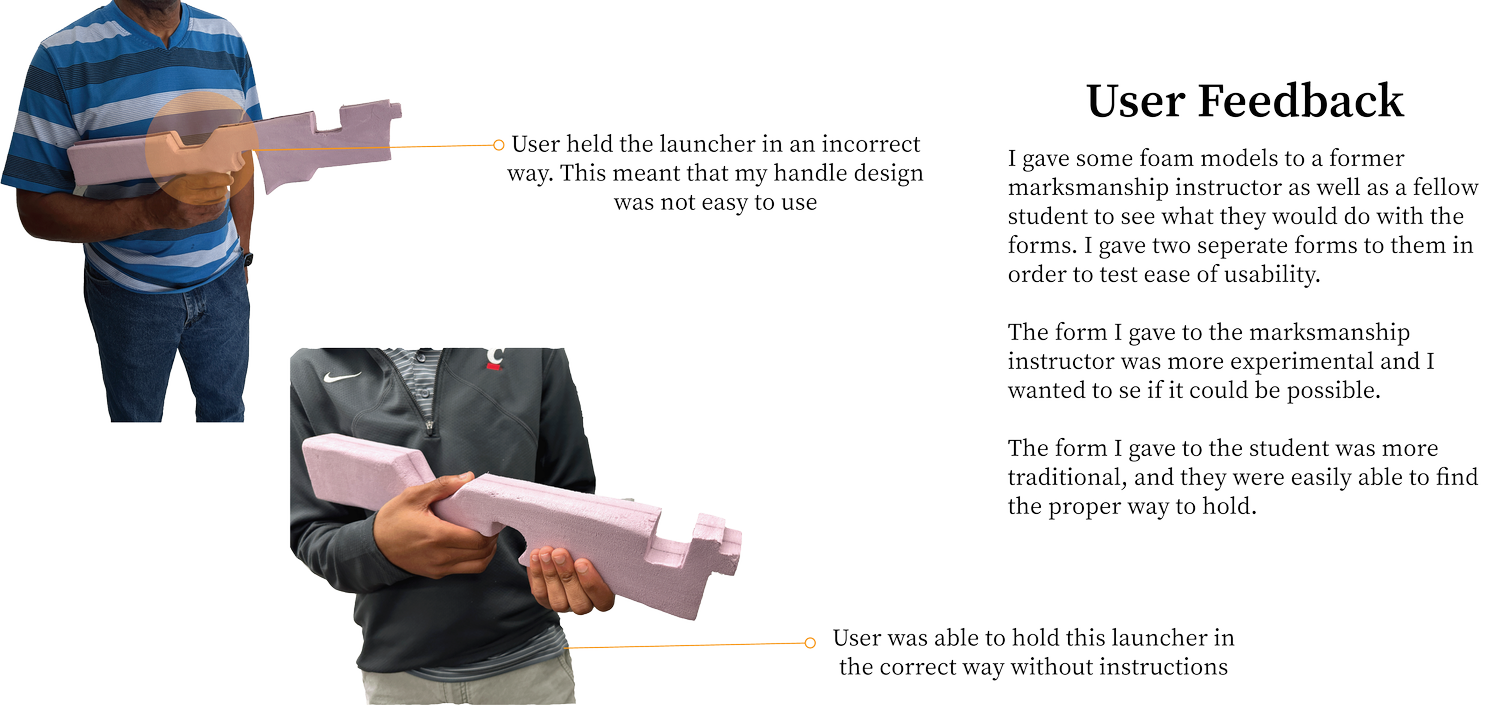
User testing sessions with ergonomic feedback annotations
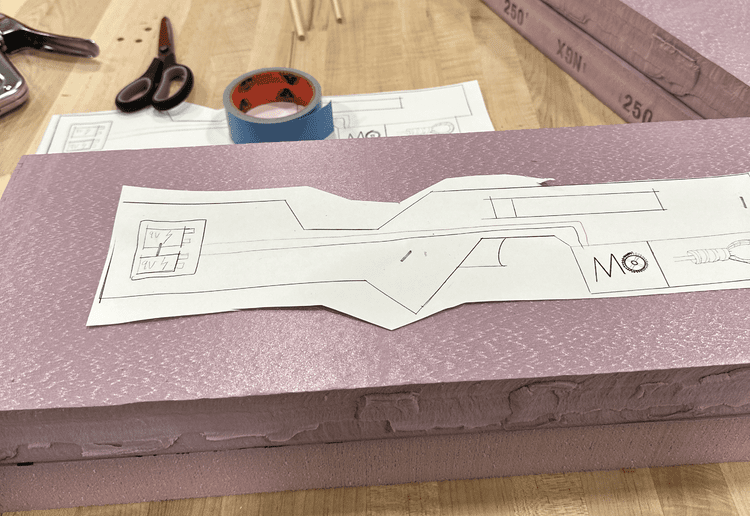
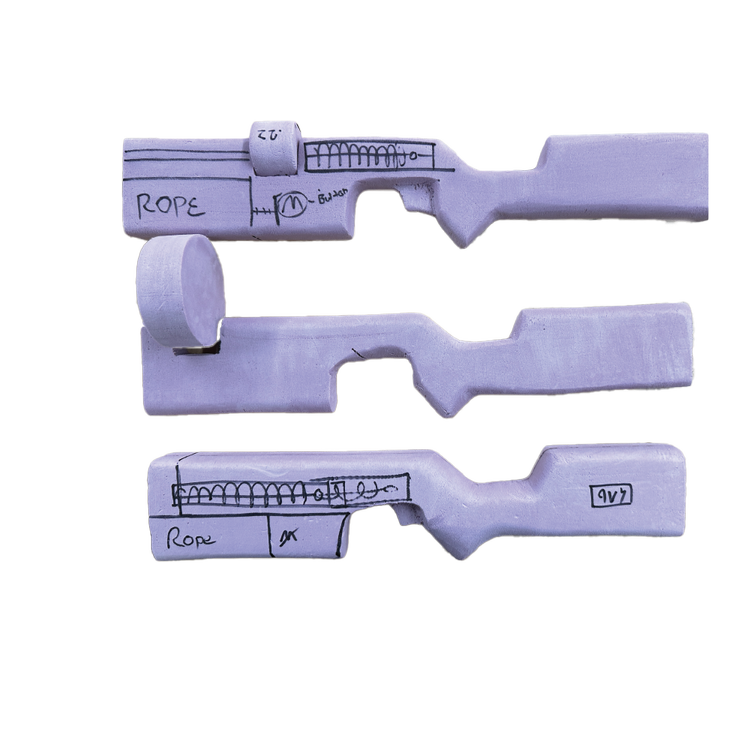
Foam prototype fabrication process and templates
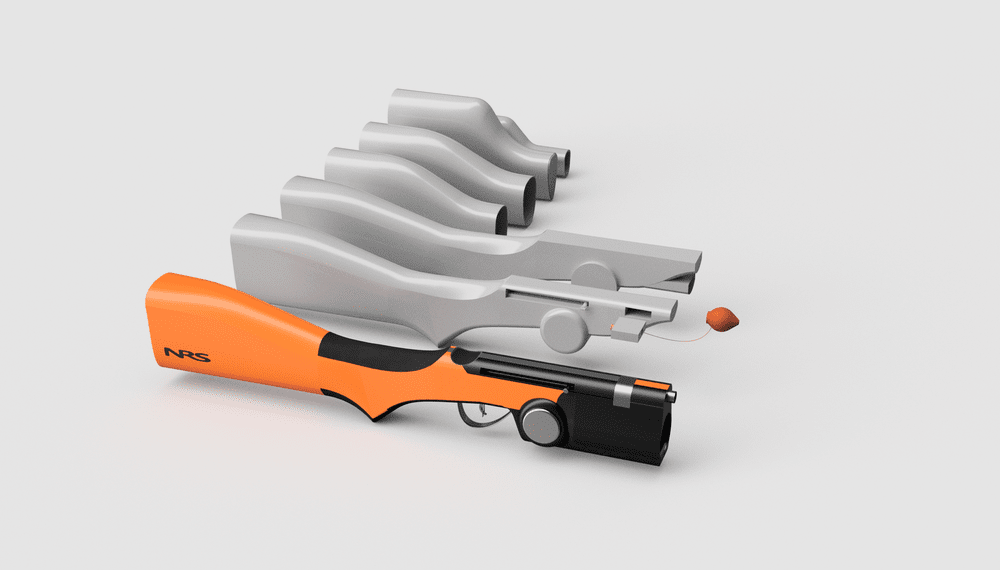
Form development progression - from early foam models to final design direction
The 3D model was developed in Fusion 360 to resolve the complex internal mechanism geometry. The design integrates six key components: a spool with nylon thread, a motor with 3-gear system, a bolt and spring assembly that impacts the .22LR blank to propel the line, the launcher line itself, and an accessible motor spool button for retrieval operation.
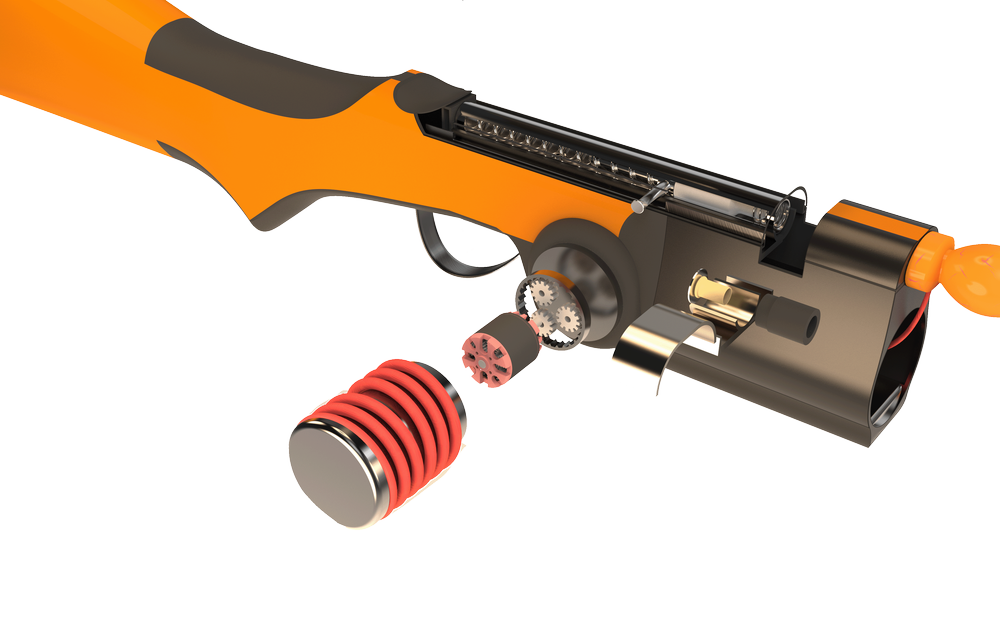
Internal mechanism - exploded view showing motor assembly, 3-gear system, and firing components
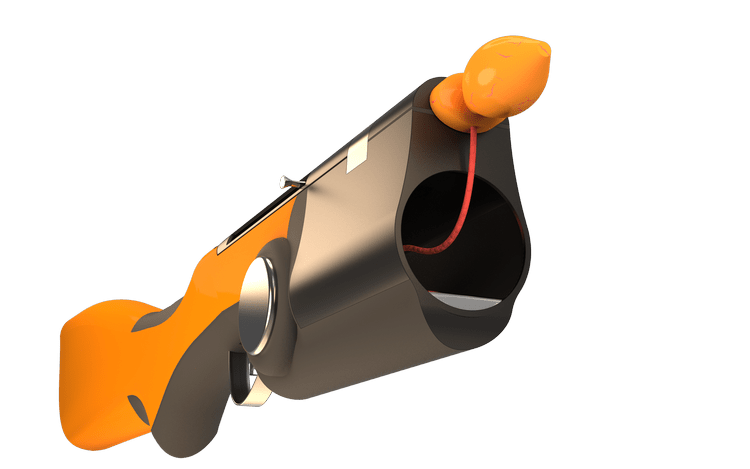
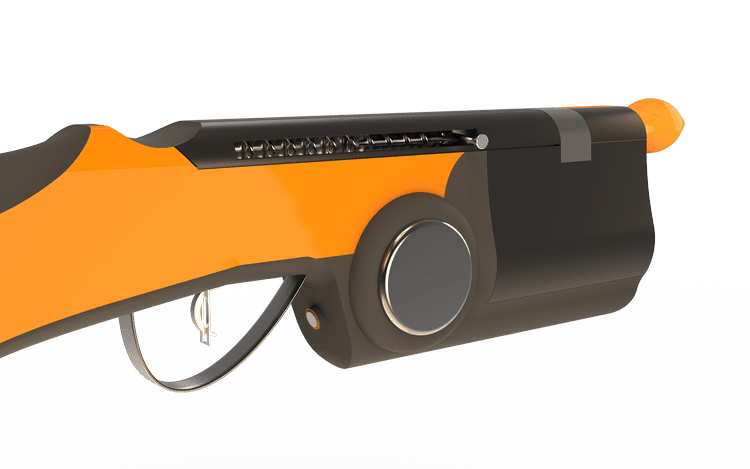
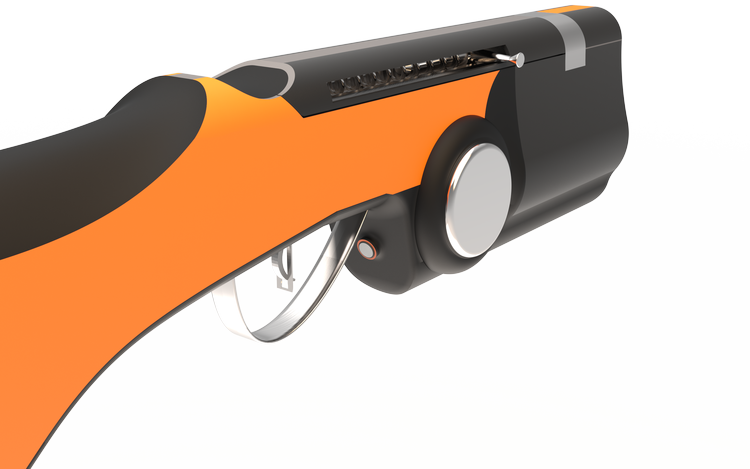
Detail renders highlighting key mechanism components and ergonomic features